xaviergut
Well-Known Member
- Joined
- Mar 22, 2023
- Messages
- 1,401
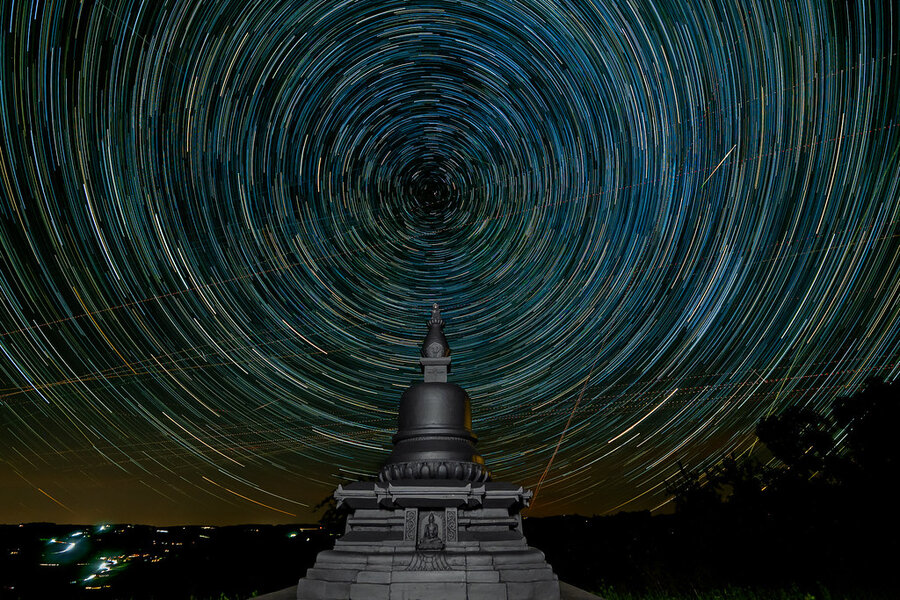
I took this photo right on the night after the eclipse on August 12th. It happened to coincide with the night of the shooting stars caused by the Perseids, and while I was looking up how to photograph shooting stars, I came across a tutorial on how to take a circumpolar (star trail) photo. At that moment, I realized there's a Stupa facing north, and its peak is almost perfectly aligned with the Polaris (the North Star).
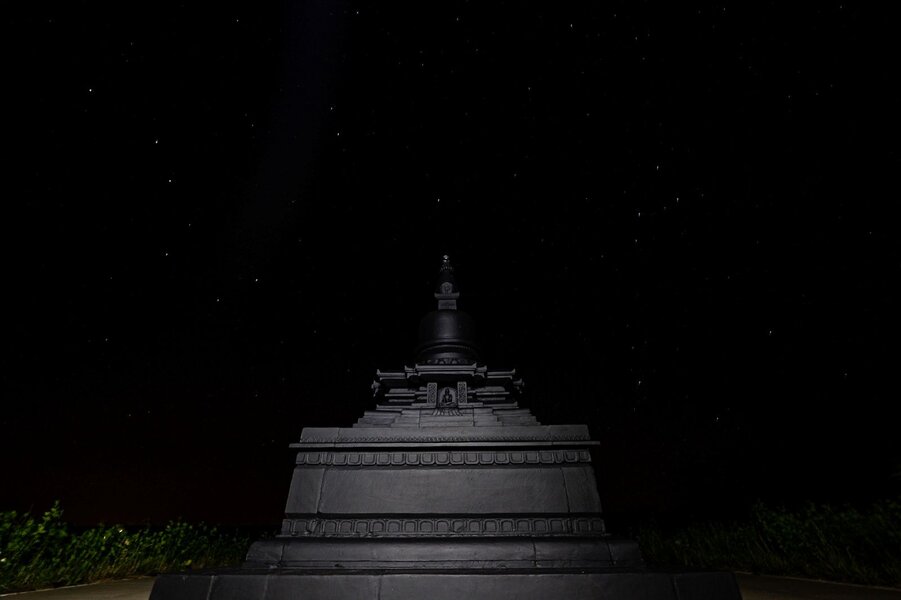
Here you can see the Big Dipper on the left side of the photo, Cassiopeia on the right, and the North Star right in the middle. So, I started doing some tests with the Lumix S5IIX and the Lumix 14-28mm lens, which is the widest wide angle lens I have.
I wanted the Stupa to be in focus in the foreground as well as the stars, so I had to use manual focus and follow PhotoPills' recommendation for hyperfocal distance with a 14mm lens at f/4. The calculated distance was 1.66 meters, meaning that if I stood further than that from the Stupa, both it and the stars would be sharp. I verified this using focus peaking and screen magnification, and I even connected an Atomos Shinobi monitor via HDMI to double-check the focus more clearly.
The next challenge was getting the right exposure. According to PhotoPills, the ideal settings were a 25-second exposure at f/4 and ISO 3200, but I quickly realized the photo was going to be overexposed.
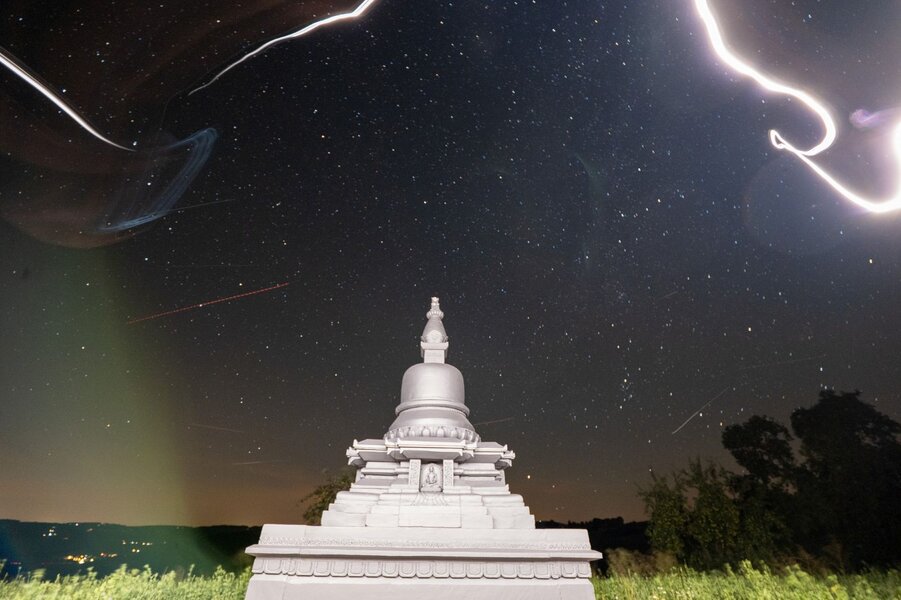
Those light trails are caused by my smartphone flashlight, since I had to light up the Stupa a bit for it to show up on Live View Composite.
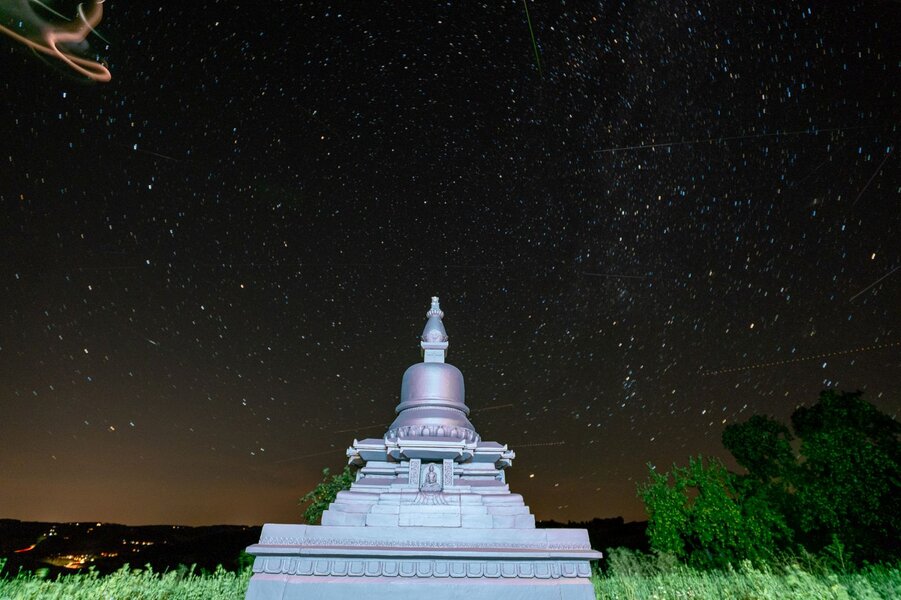
(to be continued)
Here you can see the Big Dipper on the left side of the photo, Cassiopeia on the right, and the North Star right in the middle. So, I started doing some tests with the Lumix S5IIX and the Lumix 14-28mm lens, which is the widest wide angle lens I have.
I wanted the Stupa to be in focus in the foreground as well as the stars, so I had to use manual focus and follow PhotoPills' recommendation for hyperfocal distance with a 14mm lens at f/4. The calculated distance was 1.66 meters, meaning that if I stood further than that from the Stupa, both it and the stars would be sharp. I verified this using focus peaking and screen magnification, and I even connected an Atomos Shinobi monitor via HDMI to double-check the focus more clearly.
The next challenge was getting the right exposure. According to PhotoPills, the ideal settings were a 25-second exposure at f/4 and ISO 3200, but I quickly realized the photo was going to be overexposed.
Those light trails are caused by my smartphone flashlight, since I had to light up the Stupa a bit for it to show up on Live View Composite.
(to be continued)