L-MOUNT Forum

Register a free account now!

If you are registered, you get access to the members only section, can participate in the buy & sell second hand forum and last but not least you can reserve your preferred username before someone else takes it.

Dual image stabilisation - what's going on?

pdk42

Moderator
Joined
Dec 5, 2022
Messages
2,619
Does anyone know the detailed difference between these two?

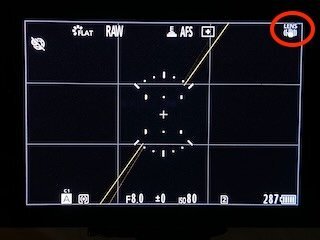
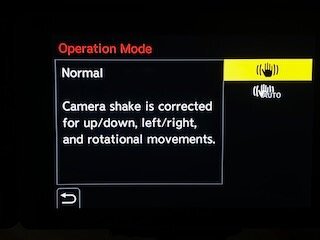
S1Rii + 100-400 (Lens + Body IS):
IMG_9336.jpeg


IMG_9340.jpeg


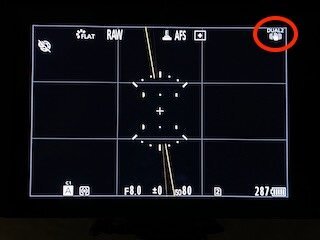
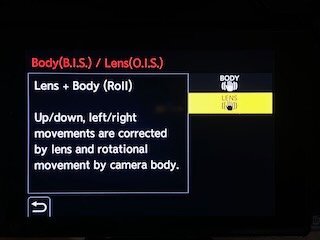
S1Rii + 24-105 ("Dual" IS):

IMG_9337.jpeg


IMG_9338.jpeg


The "Dual" definitely works better (well, to be precise, the S1Rii + 24-105 works better). Taking shots at 1/3s at 105mm on both lenses delivers mostly sharp images from the 24-105 but mostly blurred images from the 100-400.

But what exactly is the difference? And why doesn't the 100-400 support "Dual"? I thought the whole promise of L-mount (compared to m43) was that all L-mount providers/licensees are "first party" and so support the same standards. None of the m43 madness (aperture rings, dual IS, etc).
 
Last edited:
Sean Robinson from LUMIX talked about Sigma stabilisation in a video a few years ago. He was testing the Sigma 60-600 but said the same information applied to the 100-400mm.

 
Sean Robinson from LUMIX talked about Sigma stabilisation in a video a few years ago. He was testing the Sigma 60-600 but said the same information applied to the 100-400mm.


Thanks for posting that Pete. So it seems that Panasonic body + Sigma lens gives dual IS, but that a Panasonic body + Panasonic lens gives dual IS that's a bit better! I'm curious to understand what's different. Sean mutters about "operational and precision data" being available in Panasonic's own stabilisation system, but that sounds very vague.
 
Thanks for posting that Pete. So it seems that Panasonic body + Sigma lens gives dual IS, but that a Panasonic body + Panasonic lens gives dual IS that's a bit better! I'm curious to understand what's different. Sean mutters about "operational and precision data" being available in Panasonic's own stabilisation system, but that sounds very vague.
Yes, the reasons for the difference have never been clear to me but I assume it's because Sigma have designed their OIS to work with a few different mounts (L, X and E) while the Lumix engineers have the benefit of understanding how to get the best out of their own OIS+IBIS combination. This was what tipped me towards selecting the Lumix 70-300mm over the Sigma 100-400mm a few years ago.
 
IME, the 100-400 has sub-standard stabilization by current standards. The 500/5.6 is MUCH better. I’ve read that the 60-600 is also very good. The 150-600 is at least “good."

I do wish Sigma would ship an updated 100-400, with better stabilization & faster AF. It’s such a nice compliment to the 24-105 from a FL perspective.
 
Thanks for posting that Pete. So it seems that Panasonic body + Sigma lens gives dual IS, but that a Panasonic body + Panasonic lens gives dual IS that's a bit better! I'm curious to understand what's different. Sean mutters about "operational and precision data" being available in Panasonic's own stabilisation system, but that sounds very vague.
Makes a fair bit of sense to me.

When they’re dealing with their own lenses, they know the behavior to the last decimal point. When they're dealing with other companies' lenses, they know what's documented, but not the inside-out knowledge of the designers and builders.
 
Makes a fair bit of sense to me.

When they’re dealing with their own lenses, they know the behavior to the last decimal point. When they're dealing with other companies' lenses, they know what's documented, but not the inside-out knowledge of the designers and builders.
Well, I thought the whole point of the "L Mount Alliance" was that the standards for all the tech were shared and standardised such that users could be assured that compatibility would remain irrespective of the brand. Sneaky, closed tech destroys that promise.
 
Well, I thought the whole point of the "L Mount Alliance" was that the standards for all the tech were shared and standardised such that users could be assured that compatibility would remain irrespective of the brand. Sneaky, closed tech destroys that promise.
That's why I phrased it the way I did. How is it 'sneaky, closed tech' to note the fact that a manufacturer is going to know the lenses they designed and built better than lenses built by other manufacturers? As I suggested: the tech might specify attributes to, for example, two decimal places; but the OEM would know the attributes of their own lenses to four or five decimal places, just because they built the things.

Now, you could argue that an OEM should limit themselves to the spec precision in the standard; but then, they're leaving performance on the table, with their own lenses not performing as well as theoretically possible. Is it 'sneaky, closed tech' to suggest that a company should try to wring the best performance out of their camera, even if that means other companies' lenses don't (because they can't, due to lack of knowledge) work as well as their own lenses?

I would call it 'sneaky, closed tech' if a manufacturer refused to support a feature to the degree possible from the spec. But that's not what I think is going on here; as stated above, dual IS works with Sigma lenses in addition to Panasonic lenses. And it seems extremely plausible that a company would know more "operational and precision data" (for example, how fast the IS motors respond, or the precision of a given motion and how much it might overshoot) for their own lenses than another company's IS system.
 
That's why I phrased it the way I did. How is it 'sneaky, closed tech' to note the fact that a manufacturer is going to know the lenses they designed and built better than lenses built by other manufacturers? As I suggested: the tech might specify attributes to, for example, two decimal places; but the OEM would know the attributes of their own lenses to four or five decimal places, just because they built the things.

Now, you could argue that an OEM should limit themselves to the spec precision in the standard; but then, they're leaving performance on the table, with their own lenses not performing as well as theoretically possible. Is it 'sneaky, closed tech' to suggest that a company should try to wring the best performance out of their camera, even if that means other companies' lenses don't (because they can't, due to lack of knowledge) work as well as their own lenses?

I would call it 'sneaky, closed tech' if a manufacturer refused to support a feature to the degree possible from the spec. But that's not what I think is going on here; as stated above, dual IS works with Sigma lenses in addition to Panasonic lenses. And it seems extremely plausible that a company would know more "operational and precision data" (for example, how fast the IS motors respond, or the precision of a given motion and how much it might overshoot) for their own lenses than another company's IS system.
But we’re not talking here about relative performance. That I understand - it’s just fine for a manufacturer to do something better than another. But what we’re talking about here is a quite different operational mode (Dual 2).
 
Back
Top