L-MOUNT Forum

Register a free account now!

If you are registered, you get access to the members only section, can participate in the buy & sell second hand forum and last but not least you can reserve your preferred username before someone else takes it.

Sigma 20-200 review & comparison with Lumix 14-28 & 24-105

pdk42

Moderator
Joined
Dec 5, 2022
Messages
2,416
My Sigma 20-200 arrived today so I gave it a quick test out, including some comparisons to my 14-28 and 24-105. Can't compare it to the 70-200 f4 since that's dead!

1) Initial impressions & apparent build quality

The lens feels very nice in the hand. It's the usual Sigma Contemporary TSC plastic but the finish is very nice and it feels very solid. It's weather sealed and it feels like it'll last (says the man whose 70-200 f4 has just died and that's a lens that feels great too!!). I think this shows that apparent build quality is very subjective and probably doesn't correlate with reliability at all. But having said all that, I really have no complaints about the 20-200, especially at the price.

2) Handling and usage

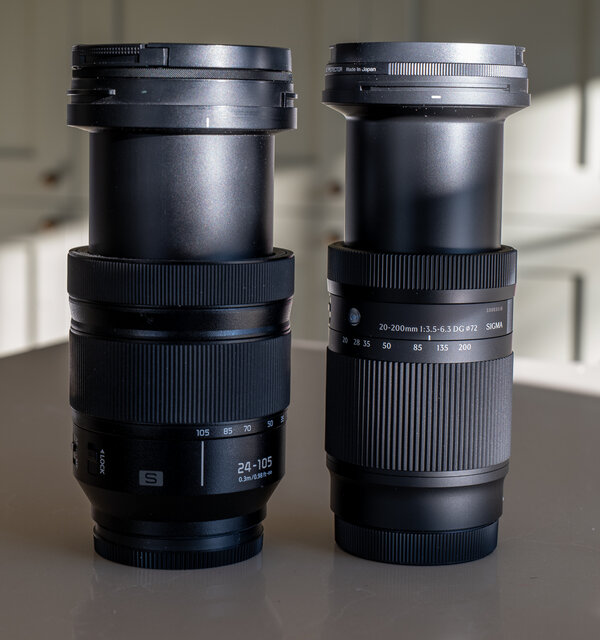
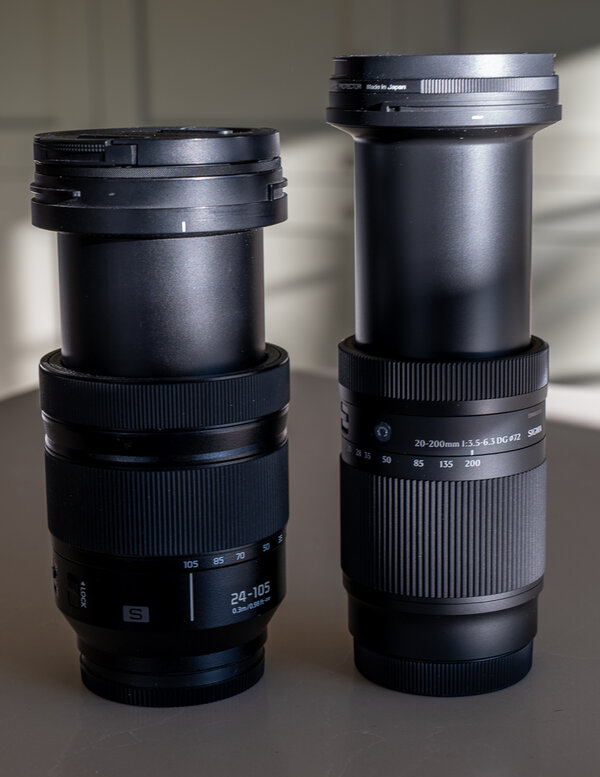
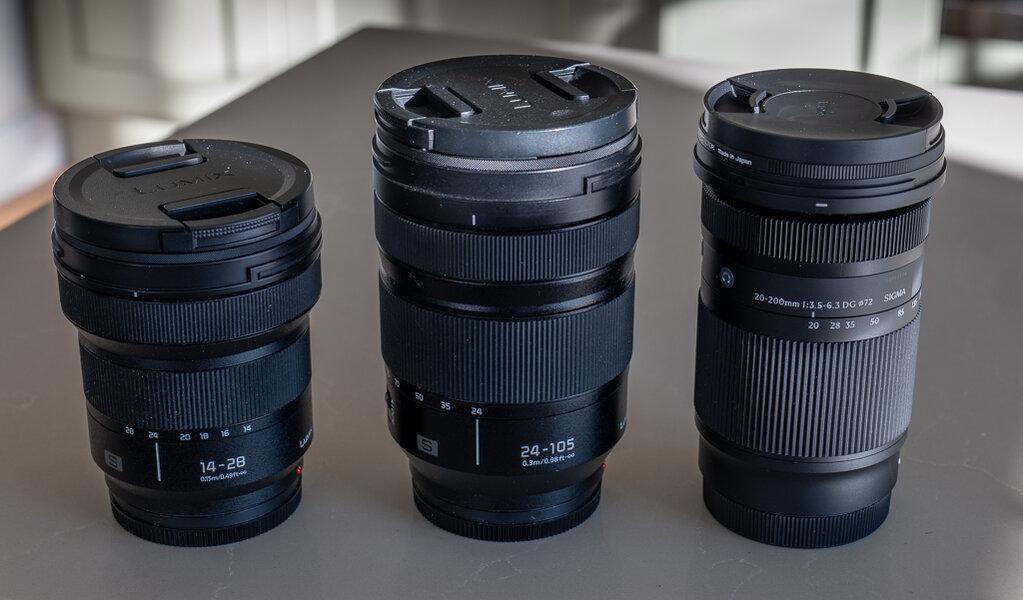
Overall the lens handles pretty well. It's not too heavy and is fairly compact when collapsed. I've posted some comparison shots against the 14-28 and 24-105 below. You'll see that it's basically the same length as the 24-105 when both are zoomed out and also when zoomed to 105mm. At 200mm, the 20-200 is longer than the 24-105. It's lighter than the 24-105, but of course, it has no OIS and it's not a constant f4.
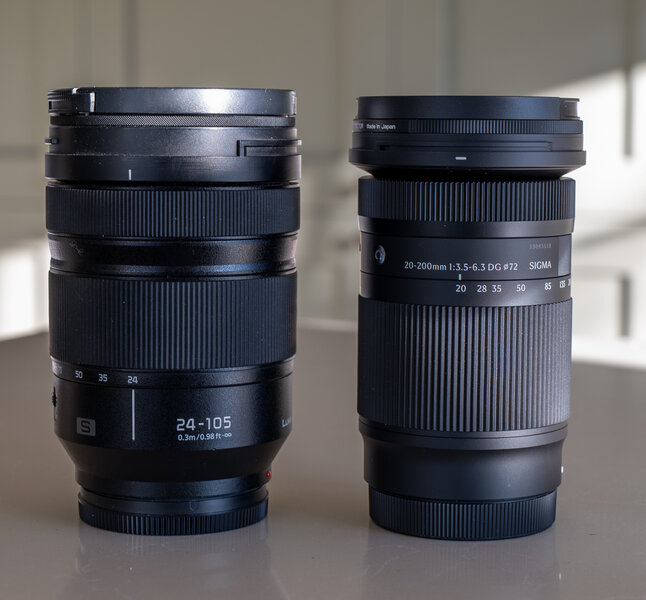
PS518409_1024.jpg


PS518411_1024.jpg


PS518412_1024.jpg


The zoom ring operates backward compared to Lumix lenses, which is a bit of a pain but it's not a deal breaker for me. The zoom operation is pretty smooth and has no creep, but it has to be said that the required movement of the zoom ring to go from 20mm to 35mm is very small, and 20-24mm is maybe 2-3mm of linear movement. This results in small adjustments to focal length near the widest setting being quite jerky. Again, not a deal-breaker, but I'd have liked a larger zoom throw at the wide end.

Other than that there is not a lot to say about the handling. There's an AF/MF switch and a lock slider (but there's no creep at the moment so I don't think the latter is really essential).

3) Sharpness - summary

In a word, I'd say it's pretty decent. For what I do, it's certainly good enough - which is a challenge because edge-to-edge sharpness is important for me (landscapes). There are samples below, but here is the TL;DR comparison in table form against the 14-28 and 24-105 when shot at f8 at close to infinity (landscape usage). I've only given edge assessments because the centre performance is just excellent on all three lenses (up to about 75% out). I left profile corrections on for the tests. I've discussed at the end what's going on when corrections are turned off.

Edge sharpness comparison20mm 24mm 28mm 50mm 105mm 200mm
20-200Very good left edge. Slightly softer right edge, but still acceptable.Very good left edge. Slightly softer right edge, but still acceptable.Very good left and right edges.Very good left and right edges.Very good left and right edges.Generally pretty good, but slightly softer than at 105mm.
14-28Very good left and right edgesVery good left and right edgesSlightly soft left & right edges.---
24-105-Very good left and right edgesVery good left and right edgesVery good left and right edgesVery good left and right edges-

Overall, sharpness is actually quite decent and although it lags the 14-28 and the 24-105, the gap isn’t huge. Colour me impressed!

4) Sharpness examples

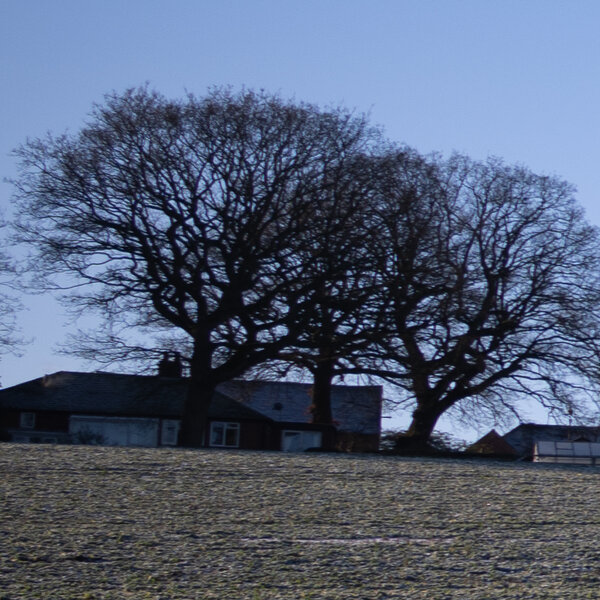
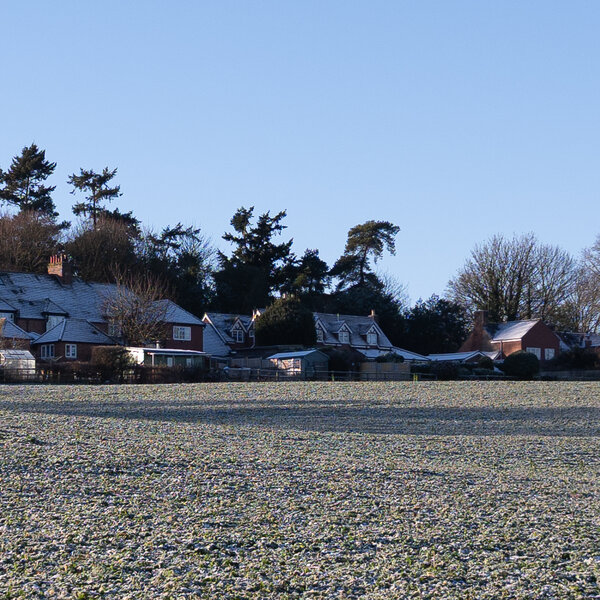
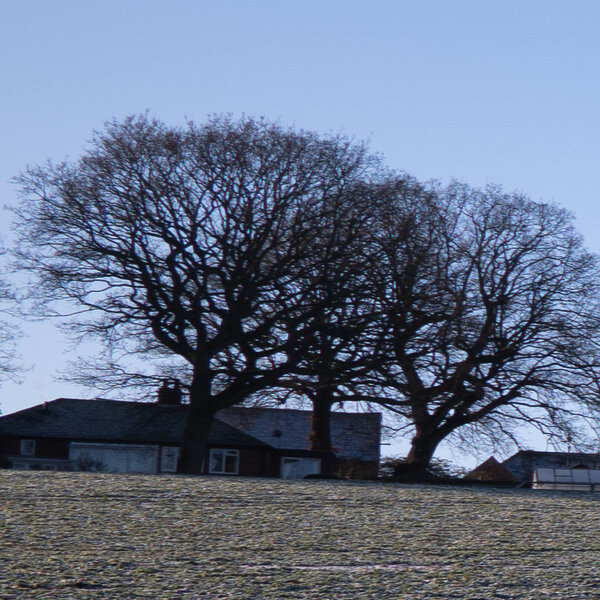
And here are some samples. All are 100% crops from images taken with the S1Rii. In other words, this is quite high magnification.

i) 20mm - comparison at apertures of f3.5 and f8.

The overall scene:
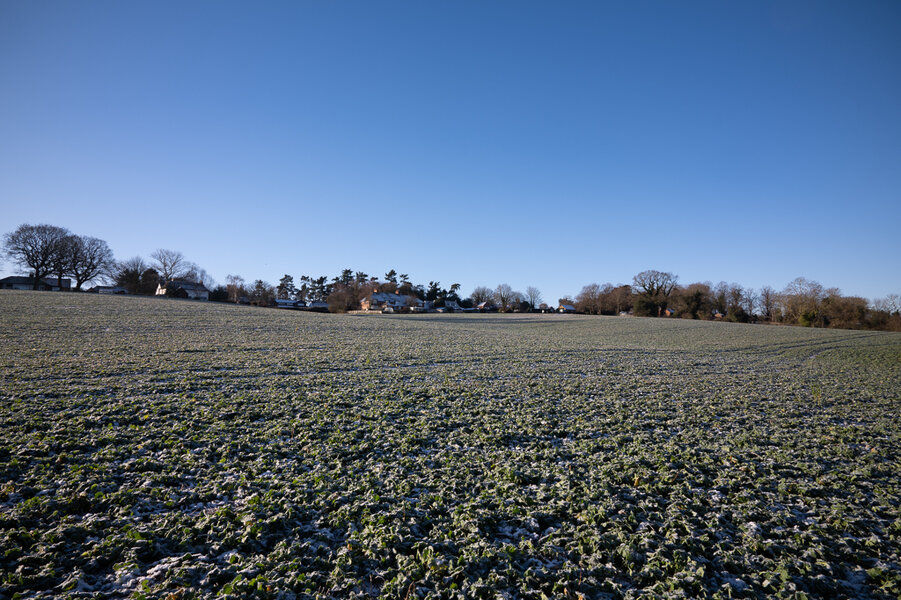
P1R26889_1024.jpg


f3.5 - left, centre, right

P1R26886_1024.jpg


P1R26886_1024-2.jpg


P1R26886_1024-3.jpg


f8 - left, centre, right

P1R26888_1024.jpg


P1R26888_1024-2.jpg


P1R26888_1024-3.jpg


To be continued ... hit the 10 images limit.
 
Last edited:
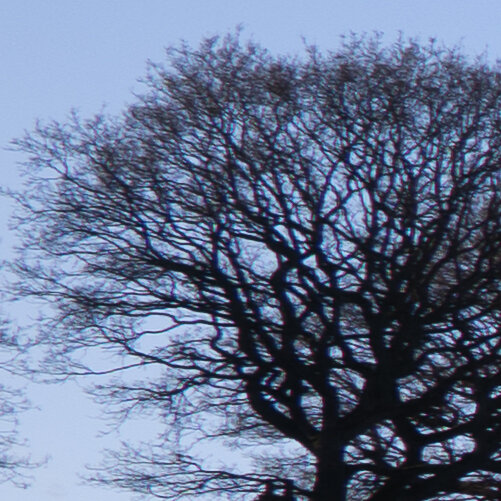
ii) Comparison with 14-28 at 20mm and 28mm

You can click on the images in the grids to get a larger version.

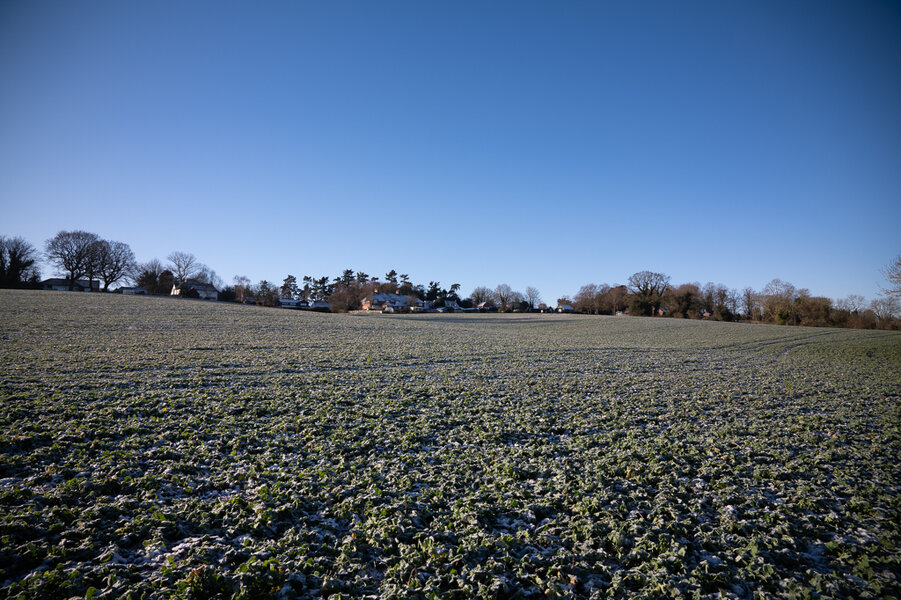
20mm
LeftCentreRight
20-200
P1R26888_1024.jpg
P1R26888_1024-2.jpg
P1R26888_1024-3.jpg
14-28
P1R26905_1024.jpg
P1R26905_1024-2.jpg
P1R26905_1024-3.jpg

You can see here that the 14-28 is a little sharper at the edges. It's not a lot, but it's there and quite clear in A/B comparisons at full zoom on the PC.
 
Last edited:
28mm

LeftCentreRight
20-200
P1R26892_1024.jpg
P1R26892_1024-2.jpg
P1R26892_1024-3.jpg
14-28
P1R26907_1024.jpg
P1R26907_1024-2.jpg
P1R26907_1024-3.jpg

Here the 20-200 is slightly better than the 14-28. This doesn't surprise me since the 14-28 is at its weakest at the long end.

I've not shown it, but a comparison with the 24-105 at 28mm reveals that the 24-105 is slightly better.
 
Last edited:
iii) Comparison with 24-105 at 24mm and 105mm

24mm

LeftCentreRight
20-200
P1R26891_1024.jpg
P1R26891_1024-2.jpg
P1R26891_1024-3.jpg
24-105
P1R26899_1024.jpg
P1R26899_1024-2.jpg
P1R26899_1024-3.jpg

The 24-105 wins at 24mm, but not by a lot.
 
Last edited:
105mm

LeftCentreRight
20-200
P1R26896_1024.jpg
P1R26896_1024-2.jpg
P1R26896_1024-3.jpg
24-105
P1R26904_1024.jpg
P1R26904_1024-2.jpg
P1R26904_1024-3.jpg

At 105mm, there is little to choose between them, but the 24-105 is a hair sharper on the right of the frame. But it's marginal.
 
Last edited:
iv) Lens Profile Corrections

There is a lot of complex barrel distortion at the wide end and a fair amount of pin cushion distortion at the long end. There is also a fair amount of vignetting going on, esp wide open.

Here is a comparison of corrected and uncorrected at 20 and 200mm

UncorrectedCorrected
20
P1R26890_1024.jpg
P1R26890_1024.jpg
200
P1R26898_1024.jpg
P1R26898_1024.jpg

You can see that at the wide end there is quite a lot of cropping and stretching going on at the edges during correction. Leaving corrections off, the edges actually sharpen up a little (I guess because the stretching is removed). Of course, there is now a lot of barrel distortion, but on landscapes that is often hard to notice.

Here is a cropped comparison on the right edge uncorrected and corrected at 20mm:

UncorrectedCorrected
P1R26890_1024.jpg
P1R26890_1024.jpg
 
Last edited:
v) Flare

Flare seems to be very well controlled. In this shot, the sun was just to the left of the frame. The 20-200 does a little better than the 14-28 in terms of maintaining contrast on the left of the frame. Neither is showing any blobs though.

20-200 @ 24mm14-28 @ 24mm
P1R26909_1024.jpg
P1R26908_1024.jpg
 
vi) Summary

Overall, I'm very happy with the performance of the 20-200. It loses out a little to the 24-105 and the 14-28 at overlapping focal lengths, but the gap is actually quite small. It seems to me that from an optical performance perspective, Sigma have done a really great job here. It's certainly way better than any of the three copies of the Panasonic 28-200 that I tested.

Does it have downsides? Yes, for sure:

Max apertureMax aperture plummets rapidly from f3.5 at 20mm to f4 at 25mm and f5.6 at 62mm. It hits f6.3 at 133mm where it stays to 200mm. It doesn't bother me too much since most of what I shoot is at f8. But for a travel lens it'll mean bumping up your ISO more than you might like. This is not a low light, handheld lens for walkabout.
No OISCompared to the 24-105, it lacks OIS. I was a bit concerned about this at first but I found in practice that at 105mm, it was probably only about 1 stop worse than with the 24-105. Even at 200mm, I found I could get acceptably sharp shots about 25% of the time at 0.4s. So, the IBIS is doing a good job.
Distortion & correctionsThere is a lot of distortion, esp at the wide end. The in-build profile mostly corrects it though, although there is some slihgt residual waviness on horizontal lines close to the top/bottom edge. This is not an ideal architecture lens or for reproducing artwork etc.

For landscapes though, it's not an issue. Moreover, if you turn off corrections, you get a slightly wider view and slightly sharper edges. For landscapes where distortion isn't too evident, there is a slight sharpness gain to be had by leaving corrections off, which is nice!
VignettingThere is a lot of vignetting, even at f8. At the wide end and max aperture, it's really quite bad. It doesn't bother me (I usually add vignetting to most of my shots anyhow!), but it might bother others.
It extends a lot at 200mm
PS518413_1024.jpg
Bokeh/DOFThis is not of interest to me at all - but given its relatively small max aperture, this is not the lens to blow the background like some f1.2 monster. But since it goes to 200mm, it does a decent enough job if you want to do that. At portrait focal lengths (70mm or thereabouts), the max aperture is f5.6, which is a 35mm f2.8 equiv on m43, so it's not a disaster. The Bokeh quality isn't great though with a bit of grittiness within the bokeh balls on specular highlights.

Overall though, I'm very pleased with this new Sigma 20-200. It's definitely a keeper and I can see it replacing the 24-105 and the 70-200 for landscape outings.
 
Last edited:
Thanks very much for putting this comparison together Paul.
The evidence from your 20-200 (and other reviews) does indeed suggest that Sigma have a winner on their hands.
This might now mean I'll need to rationalise my already crowded shorter focal length zoom collection :)
 
Last edited:
Thanks very much for putting this comparison together Paul.
The evidence from your 20-200 (and other reviews) does indeed suggest that Sigma have a winner on their hands.
This might now mean I'll need to rationalise my already crowded shorter focal length zoom collection :)
I'm super happy with it Hugh. As an f8 landscape lens, often on a tripod, it's a real winner. It'll save A LOT of weight and bulk. I reckon this plus the 14-28 is really all I need most of the time.
 
I'm super happy with it Hugh. As an f8 landscape lens, often on a tripod, it's a real winner. It'll save A LOT of weight and bulk. I reckon this plus the 14-28 is really all I need most of the time.
It will be interesting to see how you feel about that long-term. In my experience, OIS is far more useful than IBIS at longer focal lengths, never mind the dual stabilization you get out of the 24-105 and (in particular) the 70-200. Especially for those beautiful, moody landscapes you’ve been posting recently.

Of course, if you do shoot with a tripod most of the time then it’s a non-issue. But the dual-stab in the 70-200, coupled with the ability to stop it down to f/5.6 or even f/4.0 should the situation allow for it (again, in my experience, many landscapes shot at longer focal lengths don’t need the depth-of-field afforded by F8), should keep noise down for hand-held shooting.

But then again, with newer noise-reduction techniques, perhaps it doesn’t matter. Again, it will be interesting to see whether or not you end up missing that 70-200. Or do you use a tripod for most of your shooting?
 
It will be interesting to see how you feel about that long-term. In my experience, OIS is far more useful than IBIS at longer focal lengths, never mind the dual stabilization you get out of the 24-105 and (in particular) the 70-200. Especially for those beautiful, moody landscapes you’ve been posting recently.

Of course, if you do shoot with a tripod most of the time then it’s a non-issue. But the dual-stab in the 70-200, coupled with the ability to stop it down to f/5.6 or even f/4.0 should the situation allow for it (again, in my experience, many landscapes shot at longer focal lengths don’t need the depth-of-field afforded by F8), should keep noise down for hand-held shooting.

But then again, with newer noise-reduction techniques, perhaps it doesn’t matter. Again, it will be interesting to see whether or not you end up missing that 70-200. Or do you use a tripod for most of your shooting?
Yes, it will be interesting to see how it goes. Your comments about aperture piqued my curiosity so I decided to do a plot of my 2025 images. This is what I get:

1767630846076.png


So, shots at f8 and up make up 70% of my images. Of the remaining 30%, 12% are wider than f4 so are with my f1.8 or f2 primes. That leaves about 17% between f4 and f8. And at arounf f4, just 11%.

Of the f4 shots (243), 87 are with the 70-200 f4. Nearly all are of aeroplanes or animals. And in fact, I wouldn't want to use the Sigma for this sort of thing - the 70-200 is a better tool. I'm hoping I can get it back without too much cost. But for landscapes, the 20-200 will I'm sure do me well.
 
Last edited:
A quick addendum...

vii) Overall image quality

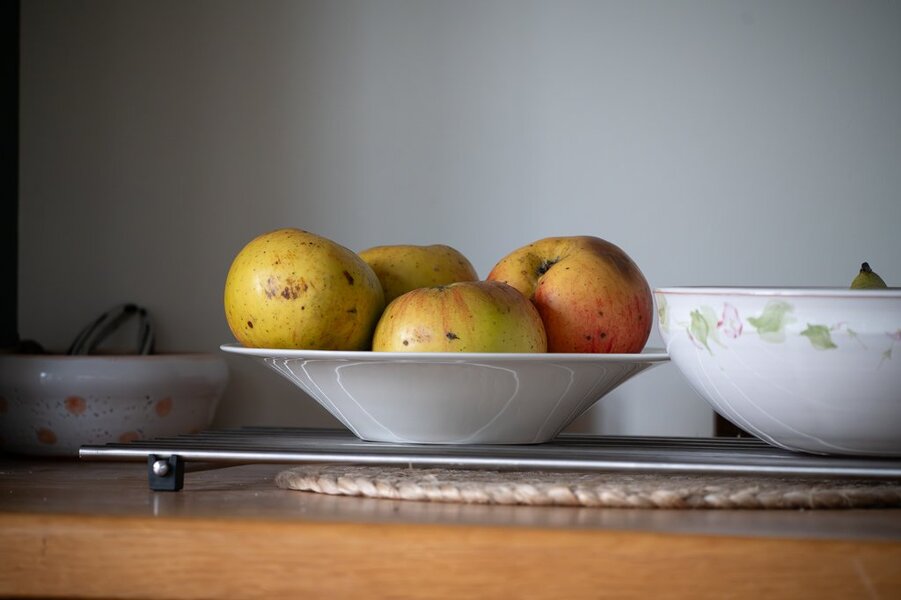
I realise that I've focused (no pun) on things like sharpness, flare etc. But I think it's worth adding a few words about the "global" image quality - that is, how photos from the lens "look". The examples above probably show this, but I think it's worth mentioning that images from the 20-200 have really good levels of colour, contrast, and vibrancy. To be honest, this was an area I found really lacking in the 28-200 with images loosing a lot of contrast towards the long end. There is none of this with the 20-200. Here are a few examples at various focal lengths to illustrate the point (none are "proper" photographs, just snaps of things around the house and garden.

200mm
P1R26794_1024.jpg


99mm
P1R26821_1024.jpg


200mm
P1R26827_1024.jpg


200mm
P1R26858_1024.jpg


200mm, ISO 6400
P1R26940_1024.jpg


200mm
P1R26923_1024.jpg


200mm
P1R26920_1024.jpg


200mm
P1R26918_1024.jpg


200mm
P1R26914_1024.jpg
 
Again thanks for posting those casual shots Paul. They definitely back up your impression of the lens.
Is that a bit flare I can see in the last shot or is it an (internal) window reflection?
 
Again thanks for posting those casual shots Paul. They definitely back up your impression of the lens.
Is that a bit flare I can see in the last shot or is it an (internal) window reflection?
I shot it out of a window that opened to the right. I suspect it's some reflection/refraction from that.
 
Yes, it will be interesting to see how it goes. Your comments about aperture piqued my curiosity so I decided to do a plot of my 2025 images. This is what I get:
View attachment 16339

So, shots at f8 and up make up 70% of my images. Of the remaining 30%, 12% are wider than f4 so are with my f1.8 or f2 primes. That leaves about 17% between f4 and f8. And at arounf f4, just 11%.

Of the f4 shots (243), 87 are with the 70-200 f4. Nearly all are of aeroplanes or animals. And in fact, I wouldn't want to use the Sigma for this sort of thing - the 70-200 is a better tool. I'm hoping I can get it back without too much cost. But for landscapes, the 20-200 will I'm sure do me well.
So, I decided to do a bit of my own testing. Using the Sigma 100-400 - which has OIS - I can, via a firmware switch, change how stabilization works: Body-only or lens-only (although, truly, lens-only still uses body-stab for roll). Did 10 hand-held shots of each firmware setting at 200mm, with a shutter speed of 1/13. And, guess what? On my S1RII, body-only gave noticeably better results. And that’s with the latest firmware on the 100-400. That’s pretty amazing, and shows just how good IBIS is on the new bodies. Now, whether or not this would hold true with, say, the newer Sigma 70-200, I don’t know. It wouldn’t surprise me if Sigma’s newer lenses have better OIS than the older designs do. But still, perhaps IBIS is good enough at 200mm. And I suspect that full dual-stabalization (which you only get with LUMIX lenses) would be even better. But I’m not sure by how much. Perhaps I’ll check against the 28-200.
 
Thanks for the comprehensive testing Paul! Great job. It looks like a great lens.

I shoot hand-held with my 24-105 and 70-300 and find the Dual-IS invaluable, so while this lens is tempting for the larger focal length range, I won't be buying it.
 
I did another test with the 28-200. So, full-on dual stabilization. I’d say that at 200mm, dual-stab gives about a 1-stop advantage over the 100-400 (again at 200mm) when using body-only stab. Similar results at 1/12s with the 100-400 vs. 1/6s with the 28-200. I do think that the longer length of the 100-400 made it easier to stabilize via my hands, but, again, I saw about a 1-stop advantage with the dual-stab between the two lenses. Which is consistent, more or less, with what Paul said above.
 
I shoot hand-held with my 24-105 and 70-300 and find the Dual-IS invaluable, so while this lens is tempting for the larger focal length range, I won't be buying it.

I've been shooting hand held with the Panasonic 100-500mm that has dual stabilization. It is really good. I don't have stable hands at all, so I'm duly impressed. I don't have confidence with IBIS only for the the 20-200mm, so I'll pass.
 
Back
Top