L-MOUNT Forum

Register a free account now!

If you are registered, you get access to the members only section, can participate in the buy & sell second hand forum and last but not least you can reserve your preferred username before someone else takes it.

Rumors The latest from L-Rumors: S9ii, S5iii, S1Hii

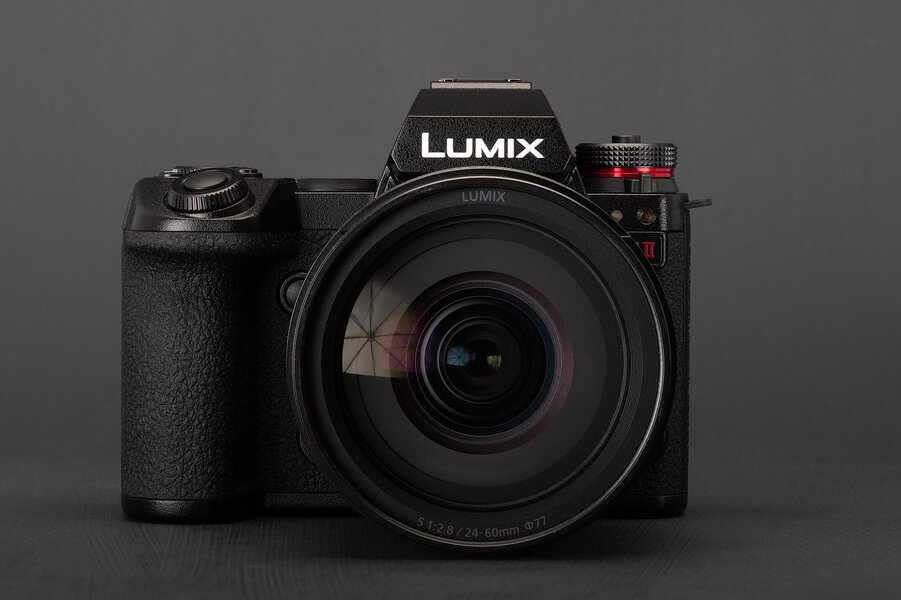
When I first saw the images and specifications of the Panasonic Lumix S1RII, I was honestly disappointed that the body design followed so closely to the smaller Panasonic Lumix S5II style.
I truly appreciate that Panasonic is moving toward more compact systems and expanding the L-Mount ecosystem with a wider variety of lenses and cameras. That’s important. But I also believe there should still be a clear separation between entry-level, compact, and flagship bodies — not only in performance, but also in ergonomics and professional usability.
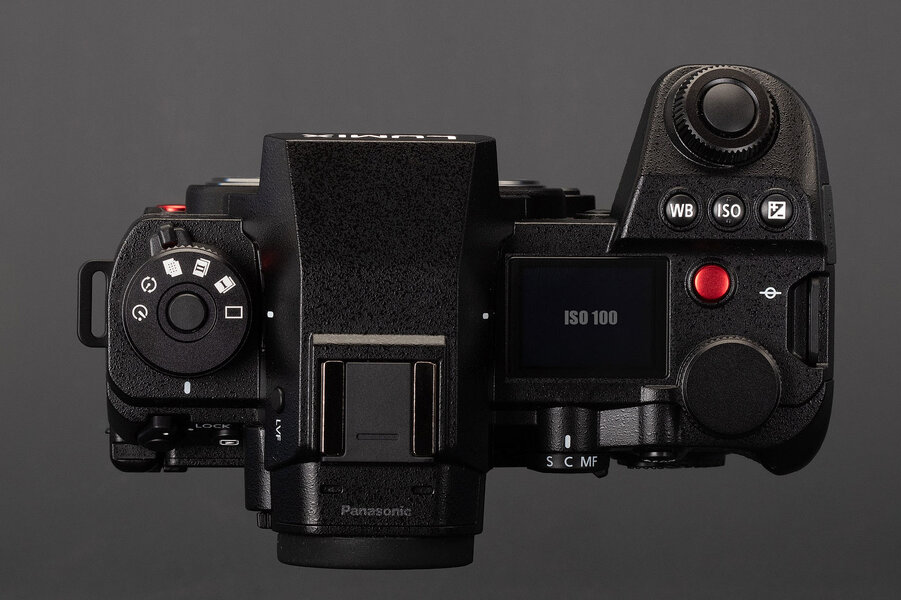
I miss the top LCD display — a feature still present on many cameras in this class from Sony, Canon, Nikon, and Fujifilm. For me, it’s not just nostalgia; it’s part of a fast and intuitive workflow.
I’m not against compact bodies at all. In fact, I’d love to see the lineup evolve in every direction: compact cameras like a future S9 with an EVF, entry-level full-frame cameras, and true professional flagships in the spirit of the S1 series.
But functionality should remain functionality. Personally, smaller control dials and simplified ergonomics reduce comfort and slow down the shooting experience.
I really hope that a future S1H II — especially as a video-focused flagship — will at least move closer to this kind of design philosophy, something I personally feel is missing from both the S1RII and the rumored S1 II.
4749518793-Recovered.jpg
0420761444-Recovered.jpg
 
But functionality should remain functionality. Personally, smaller control dials and simplified ergonomics reduce comfort and slow down the shooting experience.

I couldn’t disagree more! For me, the S5 is about as big as I can comfortably shoot with; anything larger requires uncomfortable stretches to reach the controls. So I was very glad to see their professional line move to a size that handles well for me.

For me, functionality is a combination of ‘what it can do’ and ‘how well can it do it.’ I get very annoyed when people equate functionality with ‘large size’; because for me ‘large size’ is the opposite of functional.
 
I couldn’t disagree more! For me, the S5 is about as big as I can comfortably shoot with; anything larger requires uncomfortable stretches to reach the controls. So I was very glad to see their professional line move to a size that handles well for me.

For me, functionality is a combination of ‘what it can do’ and ‘how well can it do it.’ I get very annoyed when people equate functionality with ‘large size’; because for me ‘large size’ is the opposite of functional.
I understand your point, and I actually agree that ergonomics are deeply personal. What feels comfortable and functional for one photographer may feel completely wrong for another.
My point was never really about making the camera physically larger just for the sake of size. I was talking more about functionality, durability, and professional usability. If you place the original Panasonic Lumix S1 next to the newer Panasonic Lumix S1RII, to me it feels like some aspects of the flagship-level build quality and functionality have actually been reduced rather than evolved. For example, the missing top LCD display. I understand that not everyone uses it, but there is a reason why most flagship cameras from Sony, Canon, Nikon, and Fujifilm still include one. In professional workflows, especially during fast-paced shooting, it is simply practical and efficient. The same goes for other design choices. Even details like the construction of the memory card door and external panels feel less robust compared to the original S1 generation. And the use of a smaller 3-inch screen instead of something closer to 3.2 inches also feels like a compromise driven by the push toward a more compact body. Another important point for me is long-term reliability in difficult shooting conditions. In professional environments — rain, humidity, freezing temperatures — excessive mechanical moving parts and smaller external dials can become less reliable over time. That’s one reason many high-end professional cameras tend to prioritize durable buttons and robust controls over smaller, more compact dial-based layouts. So for me, this discussion is less about size itself and more about preserving the feeling of a true flagship tool: durability, ergonomics, reliability, and professional usability under demanding conditions.
 
I like both big cameras and small ones - big ones are more comfortable for me as I have large hands but small ones are more portable, meaning less size and weight when travelling or in a situation where you need to be quick to compose. The ideal solution to this is having a battery grip to add when small size is needed, which is what I have for my Pentax K-3: that camera with the grip added is ergonomic perfection. Unfortunately, the grip for the S5 is ludicrously expensive for what it is and no third parties have cloned it to provide a more reasonable alternative.

I hear you about the top LCD and I regard this as a very useful feature. I staryed with a K200D then progressed to the K3, both of which had top LCDs, so when I moved to the S5 it was a backward step in that regard, but the original S1 line had them so I though I'd maybe get a camera with one in the future. Unfortunatey the second generation of the S1 removes that screen while most competitors have them.
 
Back
Top