L-MOUNT Forum

Register a free account now!

If you are registered, you get access to the members only section, can participate in the buy & sell second hand forum and last but not least you can reserve your preferred username before someone else takes it.

Rumors The latest from L-Rumors: S9ii, S5iii, S1Hii

When I first saw the images and specifications of the Panasonic Lumix S1RII, I was honestly disappointed that the body design followed so closely to the smaller Panasonic Lumix S5II style.
I truly appreciate that Panasonic is moving toward more compact systems and expanding the L-Mount ecosystem with a wider variety of lenses and cameras. That’s important. But I also believe there should still be a clear separation between entry-level, compact, and flagship bodies — not only in performance, but also in ergonomics and professional usability.
I miss the top LCD display — a feature still present on many cameras in this class from Sony, Canon, Nikon, and Fujifilm. For me, it’s not just nostalgia; it’s part of a fast and intuitive workflow.
I’m not against compact bodies at all. In fact, I’d love to see the lineup evolve in every direction: compact cameras like a future S9 with an EVF, entry-level full-frame cameras, and true professional flagships in the spirit of the S1 series.
But functionality should remain functionality. Personally, smaller control dials and simplified ergonomics reduce comfort and slow down the shooting experience.
I really hope that a future S1H II — especially as a video-focused flagship — will at least move closer to this kind of design philosophy, something I personally feel is missing from both the S1RII and the rumored S1 II.
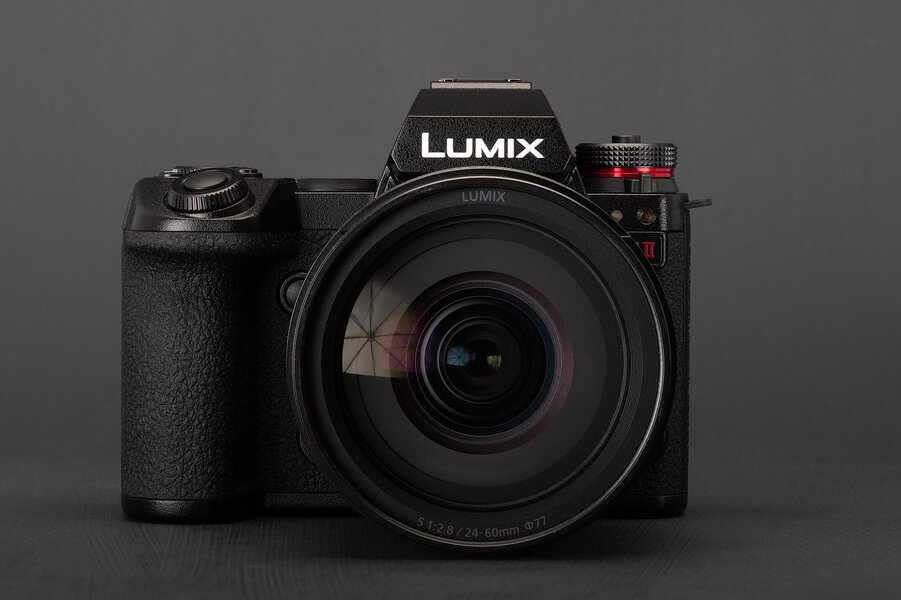
4749518793-Recovered.jpg
0420761444-Recovered.jpg
 
But functionality should remain functionality. Personally, smaller control dials and simplified ergonomics reduce comfort and slow down the shooting experience.

I couldn’t disagree more! For me, the S5 is about as big as I can comfortably shoot with; anything larger requires uncomfortable stretches to reach the controls. So I was very glad to see their professional line move to a size that handles well for me.

For me, functionality is a combination of ‘what it can do’ and ‘how well can it do it.’ I get very annoyed when people equate functionality with ‘large size’; because for me ‘large size’ is the opposite of functional.
 
I couldn’t disagree more! For me, the S5 is about as big as I can comfortably shoot with; anything larger requires uncomfortable stretches to reach the controls. So I was very glad to see their professional line move to a size that handles well for me.

For me, functionality is a combination of ‘what it can do’ and ‘how well can it do it.’ I get very annoyed when people equate functionality with ‘large size’; because for me ‘large size’ is the opposite of functional.
I understand your point, and I actually agree that ergonomics are deeply personal. What feels comfortable and functional for one photographer may feel completely wrong for another.
My point was never really about making the camera physically larger just for the sake of size. I was talking more about functionality, durability, and professional usability. If you place the original Panasonic Lumix S1 next to the newer Panasonic Lumix S1RII, to me it feels like some aspects of the flagship-level build quality and functionality have actually been reduced rather than evolved. For example, the missing top LCD display. I understand that not everyone uses it, but there is a reason why most flagship cameras from Sony, Canon, Nikon, and Fujifilm still include one. In professional workflows, especially during fast-paced shooting, it is simply practical and efficient. The same goes for other design choices. Even details like the construction of the memory card door and external panels feel less robust compared to the original S1 generation. And the use of a smaller 3-inch screen instead of something closer to 3.2 inches also feels like a compromise driven by the push toward a more compact body. Another important point for me is long-term reliability in difficult shooting conditions. In professional environments — rain, humidity, freezing temperatures — excessive mechanical moving parts and smaller external dials can become less reliable over time. That’s one reason many high-end professional cameras tend to prioritize durable buttons and robust controls over smaller, more compact dial-based layouts. So for me, this discussion is less about size itself and more about preserving the feeling of a true flagship tool: durability, ergonomics, reliability, and professional usability under demanding conditions.
 
I like both big cameras and small ones - big ones are more comfortable for me as I have large hands but small ones are more portable, meaning less size and weight when travelling or in a situation where you need to be quick to compose. The ideal solution to this is having a battery grip to add when small size is needed, which is what I have for my Pentax K-3: that camera with the grip added is ergonomic perfection. Unfortunately, the grip for the S5 is ludicrously expensive for what it is and no third parties have cloned it to provide a more reasonable alternative.

I hear you about the top LCD and I regard this as a very useful feature. I staryed with a K200D then progressed to the K3, both of which had top LCDs, so when I moved to the S5 it was a backward step in that regard, but the original S1 line had them so I though I'd maybe get a camera with one in the future. Unfortunatey the second generation of the S1 removes that screen while most competitors have them.
 
I had the S1R and thought it felt like a beast in my hands. Great camera. I have the S1RII and I think it's super comfortable to hold. I had no issue using either of those cameras over shoots taking 8+ hours. Maybe I am just adaptable, but while I see "some" difference, and like I don't think I could do intense shooting like this with an S9, I think modern body design is so good that differences in ergonomy are often down to minimal details.
 
When I first saw the images and specifications of the Panasonic Lumix S1RII, I was honestly disappointed that the body design followed so closely to the smaller Panasonic Lumix S5II style.
I truly appreciate that Panasonic is moving toward more compact systems and expanding the L-Mount ecosystem with a wider variety of lenses and cameras. That’s important. But I also believe there should still be a clear separation between entry-level, compact, and flagship bodies — not only in performance, but also in ergonomics and professional usability.
I miss the top LCD display — a feature still present on many cameras in this class from Sony, Canon, Nikon, and Fujifilm. For me, it’s not just nostalgia; it’s part of a fast and intuitive workflow.
I’m not against compact bodies at all. In fact, I’d love to see the lineup evolve in every direction: compact cameras like a future S9 with an EVF, entry-level full-frame cameras, and true professional flagships in the spirit of the S1 series.
But functionality should remain functionality. Personally, smaller control dials and simplified ergonomics reduce comfort and slow down the shooting experience.
I really hope that a future S1H II — especially as a video-focused flagship — will at least move closer to this kind of design philosophy, something I personally feel is missing from both the S1RII and the rumored S1 II.
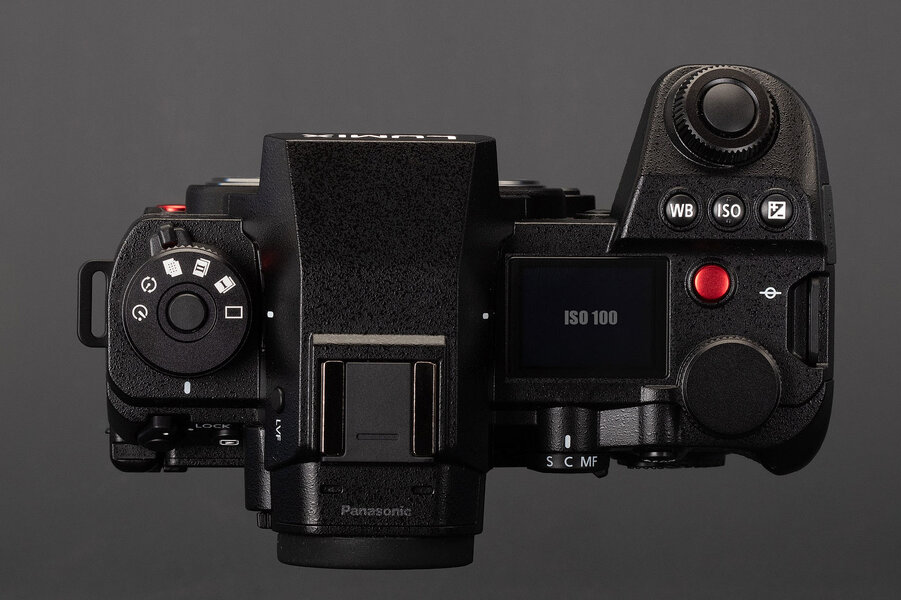
View attachment 17369View attachment 17370
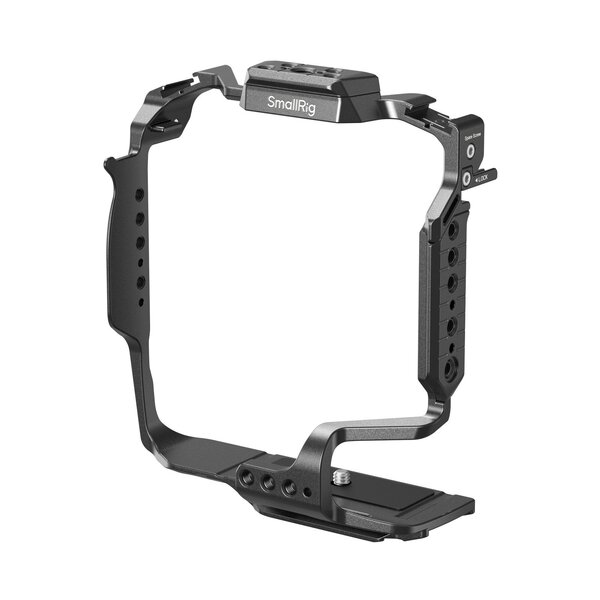
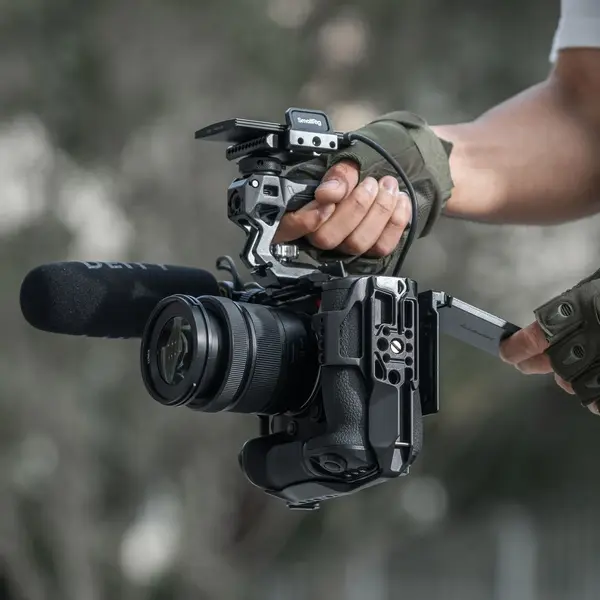
That is interesting... I use the S1Rii as if it was a Nikon Z9, with the battery grip and the cage for both, camera and grip attached:

52di3tmxn1d-1740489964228_.jpg


6olxuwxe43j-1740489964237_.webp


https://www.smallrig.com/de/Cage-fo...I-with-DMW-BG1-DMW-BG2-Battery-Grip-5147.html

And I use it with the big L-Mount lenses that I own: Sigma 28-45mm f/1.8, Lumix 70-200 f/4 and Lumix 50mm f/1.4.

The good thing is that you can always make the camera smaller and put some smaller lenses...
 
The S1R is a beast, a tank, extremly heavy… Anything like this I will sign at once. But also it is the best camera in terms of usibilty I used in 4 decades! This is related to my hand only, but the ergonomics are unmatched. I own the 5II as back up and tried the new S1RII, but both can not match the original S1R. But I would love to carry 300g or more, just on the body, less

I also love the top LCD and the mechanics of the display. No restrictions using L-plates, great handling with portrait format shots.
When the new version II S1s where released, iI thought it could be a release of a new s5iii series with R, X and standard version. Would have made sense, if there where some even better new S1s coming afterwards…

Now I‘m still working with my existing system, actually I don‘t need faster AF, picture quality is still great. There would be some nice new features, which where never released as FW update, but it is ok for me.

BUT: if they release a new S9II with EVF and better long time exposure (mechanical shutter would be nice, but not necessary), so at least a camera for photo enthusiasts, I will buy the camera at one. I would also invest in a Q3 like camera with l-mount from Leica, but the representative from Leica said: why should we do that?

Maybe, because a lot of people would by it???
 
So for me, this discussion is less about size itself and more about preserving the feeling of a true flagship tool: durability, ergonomics, reliability, and professional usability under demanding conditions.

But that's exactly my point! You're listing values you like and implying that they require size; and again, I couldn't disagree more.

For example, durability and reliability. Saying that requires size is, to put it politely, garbage. Some of my favorite cameras over the last decade+ were very small: the Lumix GM5, the Olympus Pen-F, even the Pentax Q (couldn't match up in IQ, but a load of fun to play with using C and D-mount cine lenses.) All of them had premium build quality, with solid metal bodies and precisely machined controls. And for cameras I currently use, my Sigma fp probably gets twice the use of my S5, and it's built like a brick; I could probably use it as a bludgeon without hurting it.

Ergonomics... well, I've said it above, for me a larger body hurts ergonomics. If controls require uncomfortable stretches to use, they don't get used. I'll go further: for me, size and weight override all other ergonomic concerns. If a camera (or a lens) is too big or too heavy, it doesn't get used. Features and controls don't matter; if it's too big or heavy to handhold comfortably, it stays at home. They could probably pay me to take a camera the size/weight of the OG S1 and it still wouldn't get used.

I can understand why you like the top display; but it's a trade-off, and again, 'comfortable to hold, aim and shoot' is the most important function. I will gladly trade the top display for a camera that handles better.
 
But that's exactly my point! You're listing values you like and implying that they require size; and again, I couldn't disagree more.

For example, durability and reliability. Saying that requires size is, to put it politely, garbage. Some of my favorite cameras over the last decade+ were very small: the Lumix GM5, the Olympus Pen-F, even the Pentax Q (couldn't match up in IQ, but a load of fun to play with using C and D-mount cine lenses.) All of them had premium build quality, with solid metal bodies and precisely machined controls. And for cameras I currently use, my Sigma fp probably gets twice the use of my S5, and it's built like a brick; I could probably use it as a bludgeon without hurting it.

Ergonomics... well, I've said it above, for me a larger body hurts ergonomics. If controls require uncomfortable stretches to use, they don't get used. I'll go further: for me, size and weight override all other ergonomic concerns. If a camera (or a lens) is too big or too heavy, it doesn't get used. Features and controls don't matter; if it's too big or heavy to handhold comfortably, it stays at home. They could probably pay me to take a camera the size/weight of the OG S1 and it still wouldn't get used.

I can understand why you like the top display; but it's a trade-off, and again, 'comfortable to hold, aim and shoot' is the most important function. I will gladly trade the top display for a camera that handles better.
I’m really glad this topic came up — it’s interesting how differently people perceive the same cameras. And I agree that ergonomics are very subjective.

But I feel like my point was interpreted as “bigger and heavier is better,” which is not what I meant at all. Weight itself is not critical for me. Panasonic could have kept the new body design while still retaining more of the controls and thoughtful design elements that made the original S1 such a cohesive tool. Modern components simply don’t require that much space anymore.

For me, the real question is whether the camera matches its positioning. If it’s presented as the successor to the original S1 series, I expect the same level of engineering refinement and attention to detail. The original S1 felt like a very cohesive and fully realized instrument.

I also feel the original S1 didn’t receive the recognition it deserved because the autofocus debate overshadowed everything else. Perhaps that’s why Panasonic later became more cautious. And to be honest, I don’t see the newer S1II and S1RII models as true successors to the original S1 — they are mainly connected by sensor development, not by the underlying camera philosophy. In the original model, engineers had significantly more freedom in the design approach, but due to autofocus issues and weaker commercial returns, the company likely began limiting such design decisions in later generations.

And in any case, I really enjoy this discussion — especially the process of imagining what future Panasonic cameras could look like, including a hypothetical S1HII, its ergonomics, and how it might feel in actual use. And if I’m being honest, most of us probably expected not “another S5II in a different body,” but something closer in spirit to the original S1 — maybe slightly more compact or lighter, but with the same level of engineering quality, refinement, and the feeling of a true tool.
 
Last edited:
I’m really glad this topic came up — it’s interesting how differently people perceive the same cameras. And I agree that ergonomics are very subjective.

But I feel like my point was interpreted as “bigger and heavier is better,” which is not what I meant at all. Weight itself is not critical for me. Panasonic could have kept the new body design while still retaining more of the controls and thoughtful design elements that made the original S1 such a cohesive tool. Modern components simply don’t require that much space anymore.

I guess I don't see it?

The only thing I noticed as a benefit in the OG S1 was the top display. Anything in the controls was overshadowed by how uncomfortable it was for me to hold and shoot. Same for things like the battery and card doors. And it's hard for me to read:

excessive mechanical moving parts and smaller external dials can become less reliable over time. That’s one reason many high-end professional cameras tend to prioritize durable buttons and robust controls over smaller, more compact dial-based layouts. [Emphasis added]

as anything but 'small bodies are bad, bigger bodies are better'. And I've already said why I think build quality is not linked to size. Is something like the Leica M11 not a premium "high-end professional camera"?

And to be honest, I don’t see the newer S1II and S1RII models as true successors to the original S1 — they are mainly connected by sensor development, not by the underlying camera philosophy. In the original model, engineers had significantly more freedom in the design approach, but due to autofocus issues and weaker commercial returns, the company likely began limiting such design decisions in later generations.

And I really don't see this.

As I see it, the S1II lineup has better sensors, improved (and absolutely flagship-level) performance (not just autofocus, but better dynamic range and faster fps), new features like HDR support in HEIF and multi-exposure hi-res mode. It can do more, faster, with better image quality. How is that not a flagship? Admittedly I see the smaller body as a major improvement and not a liability, but I find it hard to claim the II lineup is not a true successor. As for calling it "another S5II", I think that's crazy talk; the S1II models are on a completely different plane in terms of performance, features and capability.
 
I guess I don't see it?

The only thing I noticed as a benefit in the OG S1 was the top display. Anything in the controls was overshadowed by how uncomfortable it was for me to hold and shoot. Same for things like the battery and card doors. And it's hard for me to read:


as anything but 'small bodies are bad, bigger bodies are better'. And I've already said why I think build quality is not linked to size. Is something like the Leica M11 not a premium "high-end professional camera"?


And I really don't see this.

As I see it, the S1II lineup has better sensors, improved (and absolutely flagship-level) performance (not just autofocus, but better dynamic range and faster fps), new features like HDR support in HEIF and multi-exposure hi-res mode. It can do more, faster, with better image quality. How is that not a flagship? Admittedly I see the smaller body as a major improvement and not a liability, but I find it hard to claim the II lineup is not a true successor. As for calling it "another S5II", I think that's crazy talk; the S1II models are on a completely different plane in terms of performance, features and capability.
I think we may actually be talking past each other a bit. I’m not arguing that the camera needed to remain large, or that smaller bodies can’t be premium or professional. My point is simply that I wish Panasonic had preserved more of the original S1 design philosophy and usability details, even within a more compact body.
 
I liked my S1R and thought it had good handling. But its size and weight didn’t make for easy portability. I also found no use for the top LCD display. All the info I need to control the camera is on the EVF or the rear screen. Top LCDs made sense in DSLRs with no live view and limited information in the EVF. But I fail to see the point of them in a modern mirrorless camera.

So for me the S1Rii is a much better physical package, but I confess I do miss the sense of build quality in the old S1 cameras.
 
I think that the size and weight of the original S1 had a big negative effect on sales. Panasonic thought that people used to the size and weight of top-tier DSLRs wouldn't mind but Panasonic came along too late and many photographers were already enjoying the 20%-or-so reduction in weight from moving to mirrorles and didn't want to go back.

As for the top screen, I almost always have my S5 set to use the sensor to switch between EVF and screen even though I shoot around 85% using the EVF. If I take the camera away from my eye and want to adjust something I need to wait for the screen to activate and then for the EVF to activate again when I go back to it. If I had a top screen I could leave the camera on EVF-only and make my adjustments looking at the LCD. It would be a faster, smoother and more enjoyable shooting experience. In fact, a top LCD is one of the few features I'd be willing to pay significantly for beyond what my existing S5 already offers.
 
In my opinion, and this is just my personal view, the differences between the new S1 II, S1R II, and S1 IIE in terms of EVF, photo and video screen, SSD recording, and 32-bit flow justify the price difference compared to the S5 II, even though the size of the new S1 and S5 II is practically identical. And that's without even getting into the sensors...
 
Back
Top